


Gamify Your College Life: Try More, Experience More, Feel More, and Make It Wonderful | Department of Mechanical and Computer-Aided Engineering, Chun-Ta-Chi Tsou
2025/09/04
Global Mobility


Is College Really Four Years of Freedom? “College lets you play for four years?” Many of us have heard this so-called biggest lie from our high school teachers. I think it’s both true and false—it all depends on how you define the word “play.”
The World’s Largest Student Entrepreneurship Competition: Three Weeks to Pitch to Investors In my sophomore year, I was fortunate to be accepted into the European Innovation Academy (EIA), the world’s largest student entrepreneurship competition, co-organized by Stanford University, UC Berkeley, Google, and other renowned institutions. The 2024 event was held at the School of Economics, University of Porto, Portugal. The challenge was to create a complete startup proposal that could impress investors within three weeks. I teamed up with partners from the Netherlands, the US, and Estonia to develop a minimum viable product for a smart bicycle tail light, using multiple sensors to detect the environment in real time and ensure rider safety.
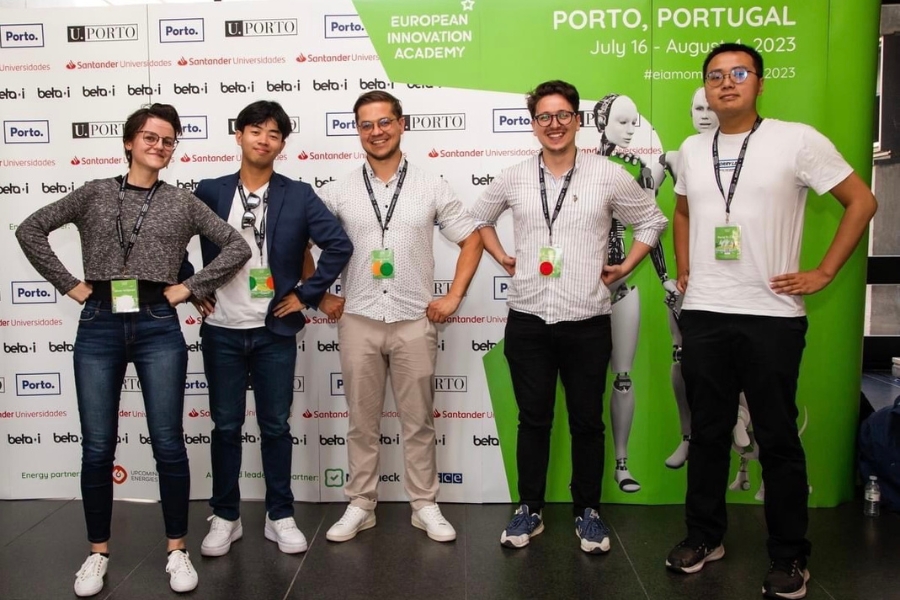
Forming a multinational team with partners from the Netherlands, the United States, and Estonia, each of us brought our own expertise and cultural perspectives, often sparking unexpected ideas and creativity.
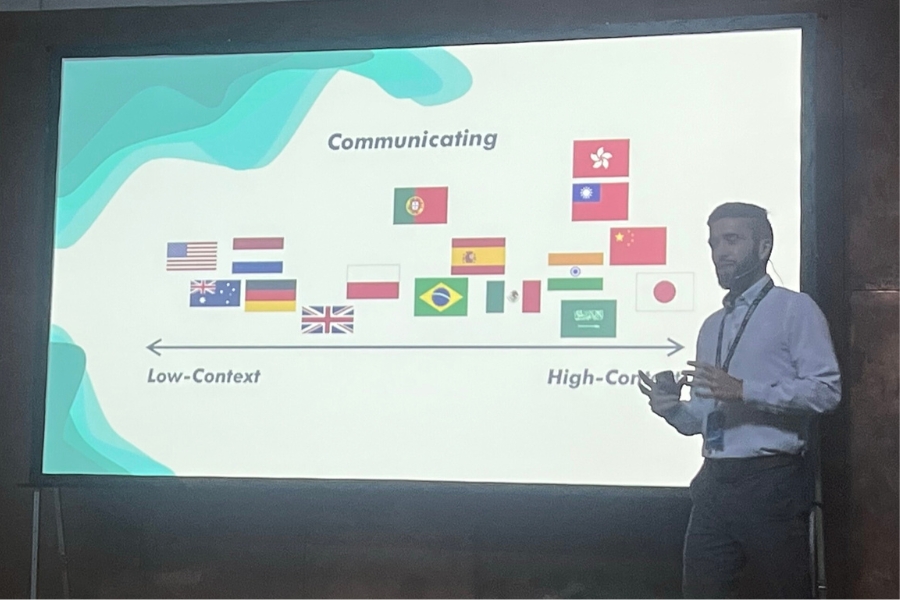
The instructor explained the differences in communication styles across cultures—some countries prefer direct communication, while others tend to be more implicit and rely on contextual understanding.

For me, the most challenging part of the competition was having meetings and discussions in English with teammates and mentors from different countries. Here, I want to encourage my juniors: language is never a talent, but a habit; the greatest risk is not daring to try.
The environment here made me observe that Silicon Valley’s startup culture emphasizes “rapid trial and error” and focuses on long-term potential, while venture capital in Taiwan still prefers teams with stable financial structures. Of course, this is related to the local market size and industry structure, but it also reflects different approaches to startup ecosystem development.
Zero to Maker: Two Years in the Cross-Strait Maker Competition I participated in the Cross-Strait Maker Competition during the summers of my sophomore and junior years. This event is jointly organized by Tongji University, Feng Chia University, and Fuzhou University. Makers are people passionate about technology and hands-on practice, who enjoy sharing techniques and exchanging ideas—a new educational philosophy of “unity of knowledge and action.” The competition includes tracks such as open-source innovation, structural challenges, digital futures in architecture, artificial intelligence, plastic reduction, and sustainable transportation in the digital era.
In both competitions, my teams proposed innovations in sustainable materials and transportation technology. During exchanges with other teams, I found that every maker has a different starting point, but they all share one thing: an inner thought—“I want to make this myself!” This simple idea drives everyone to self-learn knowledge and skills, building their projects bit by bit. This is the “Zero to Maker” journey.
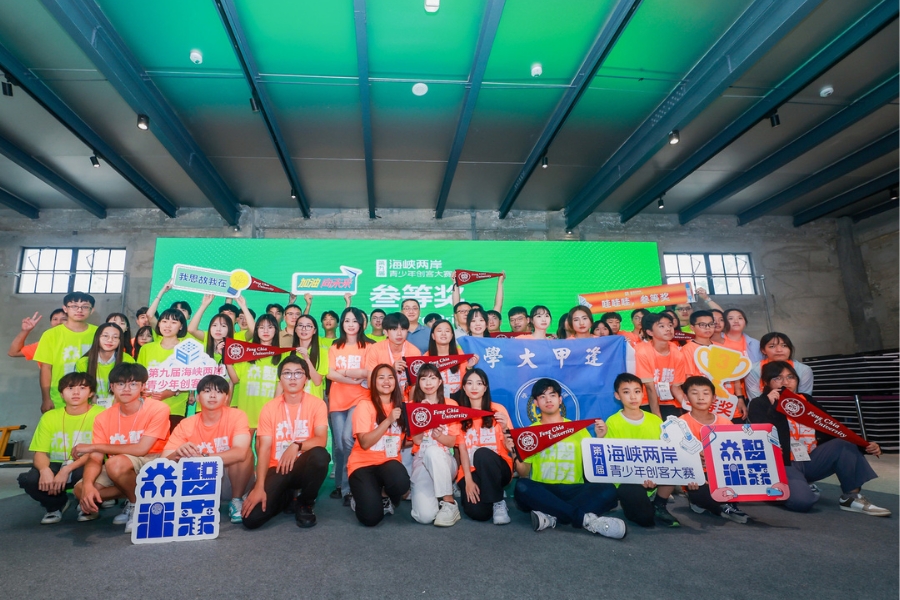
During the summers of my sophomore and junior years, I participated in the Cross-Strait Maker Competition. The photo shows the Feng Chia University team after the award ceremony at Tongji University in Shanghai.
Competitions: The Best Stage for Creativity
College is the prelude to entering the workforce, and as students, we have a low cost for making mistakes and trying new things. We should seize these four years to explore the unknown. In my spare time, I participated in many competitions and activities, such as English presentation contests, PMI Project Management Competition, Maas and Hotai Data Hackathon, RYLA Silicon Valley Institute Camp, TSMC Youth Dream Project, Useless Robot Competition, Sengoku Strategy Innovation and Entrepreneurship Competition, and the University Golf Cup. These were all unfamiliar fields to me, but by trying different things, I gained new perspectives and possibilities.
Some competitions I highly recommend include:
- Central Taiwan Intercollegiate Startup Weekend: Organized by the iSchool’s Innovation and Entrepreneurship Program and Dream Seed e-Hub, this is an exciting three-day hackathon-style startup challenge that trains rapid validation and implementation skills. Industry professionals are invited to participate, and teams must complete their proposals within 54 hours, from market research and data collection to integrating instructor guidance.
- College Student Startup Simulation Program: Promoted by the Ministry of Education’s “College Innovation and Entrepreneurship Simulation Learning Platform,” this program brings “entrepreneurship” into the university, allowing students to use real funds and team operations to simulate running a small startup. Our team focused on “Why buy when you can borrow?” and invested NT$100,000 to build the Airsupport sharing platform, combining sharing and sustainability concepts. We didn’t just write a business plan—we entered the market, designed a prototype, and considered user needs.
- Red Bull Flugtag: This is a global event organized by Red Bull. Participants must design, build, and pilot their own “flying machines” off a platform into the sea, competing for the longest flight. As the only university team selected, we experienced the true maker spirit and hands-on practice, from design submission and finding sponsors to building the project.
- Ministry of Economic Affairs Net-Zero Competition: In response to Taiwan’s goal of fully electrifying city buses by 2030, this interdisciplinary competition gathers public opinions and focuses on electric buses as the main mode of public transport, providing a 2.0 solution for full electrification.

Participants in Red Bull Flugtag must handcraft their own non-powered flying machines.
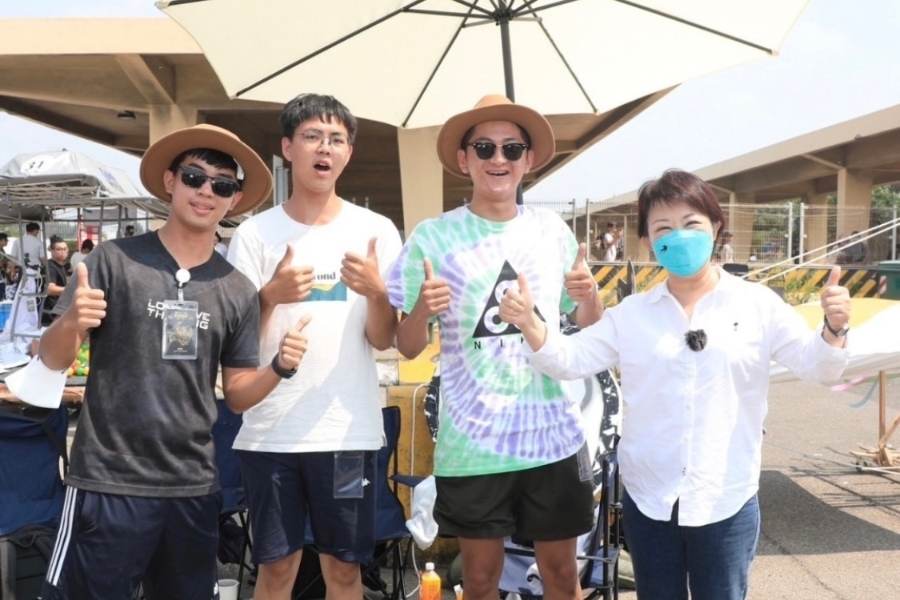
After the event, I exchanged thoughts and experiences with Mayor Shiow-Yen Lu.
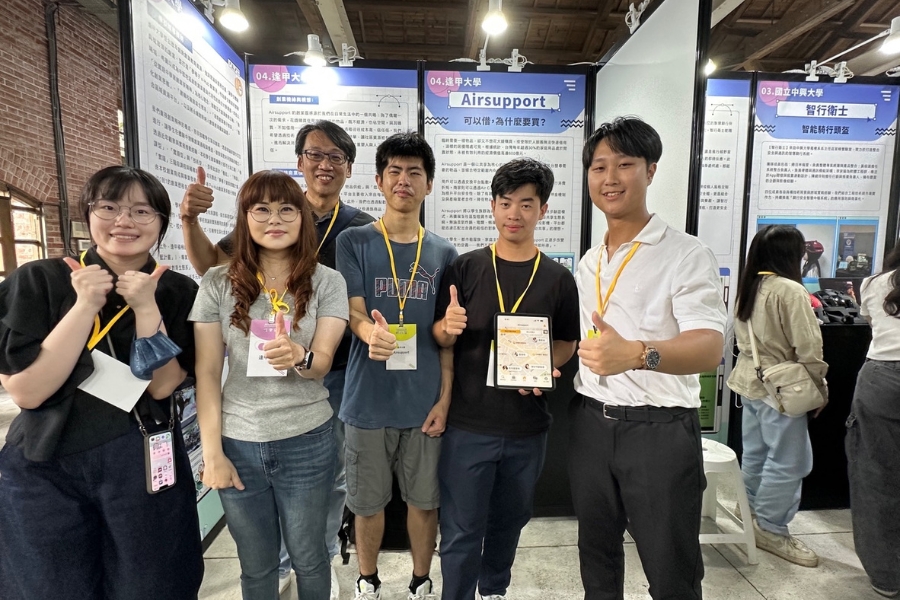
I joined my startup team in participating in the entrepreneurship showcase at Songshan Cultural and Creative Park in Taipei.
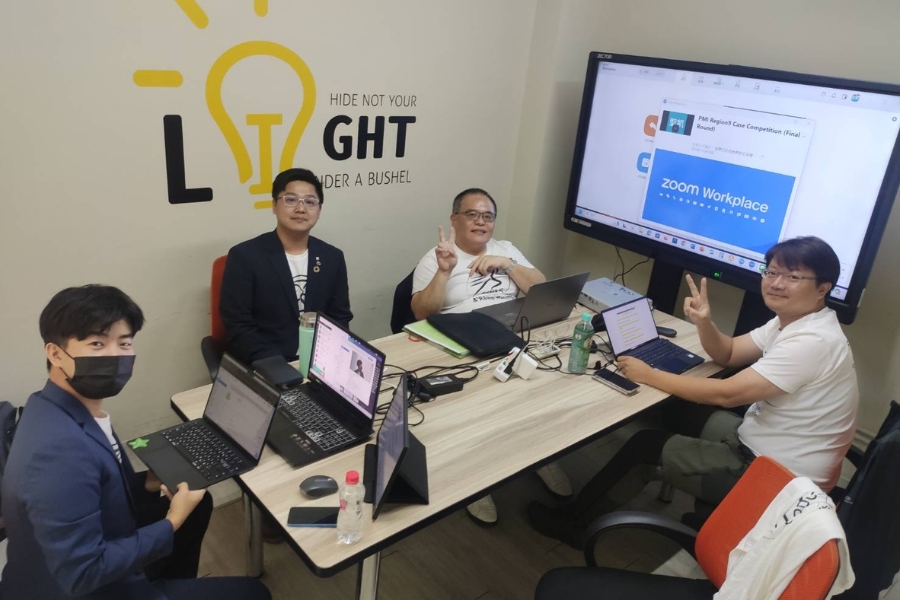
I served as the English presenter for my team in the PMI International Project Management Competition.
- College is the best time to make mistakes, try, and grow. Why not take this time to challenge yourself and treat every exploration as an opportunity to find a better version of yourself?
World Economic Forum and Industry Practice: A Global Perspective
In my sophomore year, I took the “World Economic Forum” honors course offered by the iSchool, personally planned by Chairperson Cheng-Shu Kao of Feng Chia University, and taught weekly by four professors. This course, taught by top university leaders and industry executives, analyzes economic development and transformation in various countries and emphasizes interdisciplinary group learning. I believe it is the most valuable and unique course at Feng Chia University. Another course, “Industry Practice—Dynamic Competition and Survey Analysis,” also offered by the iSchool, was co-taught by President Bing-Jean Lee of Feng Chia University, DIGITIMES President Qin-Yong Huang, former TSMC Global R&D Director Konrad Young, and former CSDC Chairperson Jih-Hsin Sher. This course focuses on real industry transformation issues, with teams completing industry analysis reports.
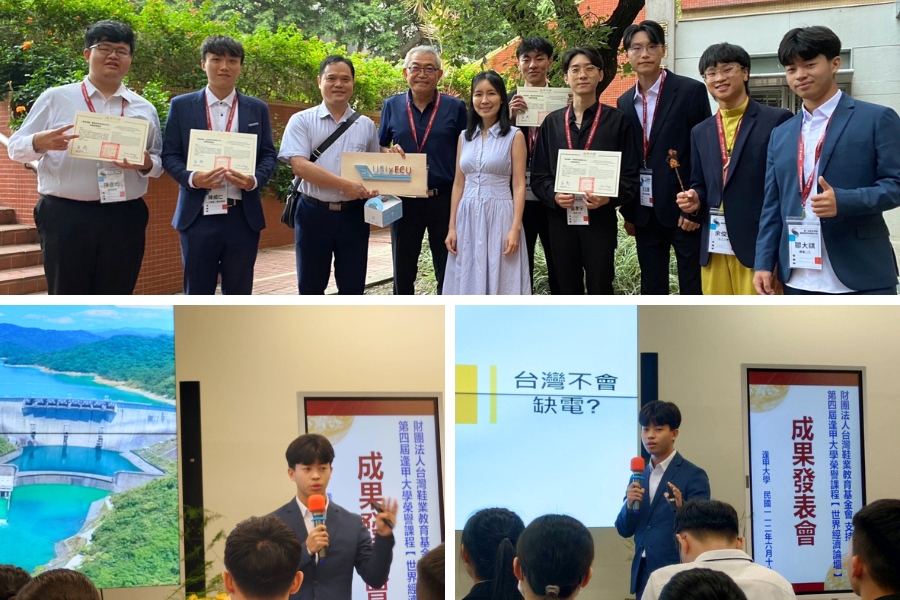
At the semester-end presentation of the World Economic Forum honors course offered by iSchool, I represented my team to report on the issue of power shortages, focusing on the causes of energy supply-demand imbalance and the challenges of renewable energy development.
Try Everything!
“Time management” is the most important lesson in college, especially with so many resources at Feng Chia University. Whether you dream of going abroad or interning, the university has many opportunities for those who are prepared! I hope everyone will bravely try all possibilities during their four years in college, explore widely, and find the stage that suits them best!
Written by Chun-Ta-Chi Tsou, Department of Mechanical and Computer-Aided Engineering
by Chun-Ta-Chi Tsou, Department of Mechanical and Computer-Aided Engineering